

Venturing south for a snowshoe
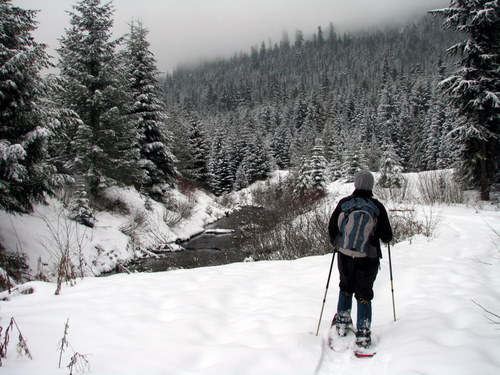
December 21st, the official start of winter, has just only recently passed. Though it may be only a calendar date to some, in Washington’s Cascades, winter’s arrival is obvious, its long stay welcomed.
The white flakes so indicative of this new season are enticing. In these coldest and darkest of months, I get outside, purposefully, to engage with this landscape in yet another new and enlightening way – through snowshoeing.
To see the natural world cloaked all in white takes some skill. In western Washington, snow has not quite reached the lowlands except for short, sporadic bursts. Most of this precipitation has collected up in the higher parts of the mountain valleys. When snow does not come to me, I come to it, and snowshoeing allows me to see places in winter that many only dream of.
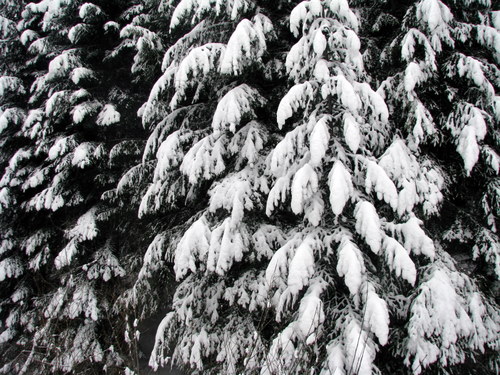 Winter is here to stay as evidenced by this snow loading on evergreen trees
As most of the staff and graduate students of North Cascades Institute have taken their winter leave for the month of December, I, too, was situated visiting my family down in the western Washington lowlands. The call of the Environmental Learning Center was great, and I ached to see snow again, but decided to venture to an area closer to home – Snoqualmie Pass, in the Mount Baker-Snoqualmie National Forest.
Gold Creek Pond Trail, situated at about 3000-ft. in elevation, is a 1.0 mile-long trail that encircles a small pond with ample opportunities for naturalizing. In the summer months, this trail is easily accessible from a picnic area, but in winter, the snow adds an additional 0.3 miles one-way along Gold Creek Road where the trailhead begins.
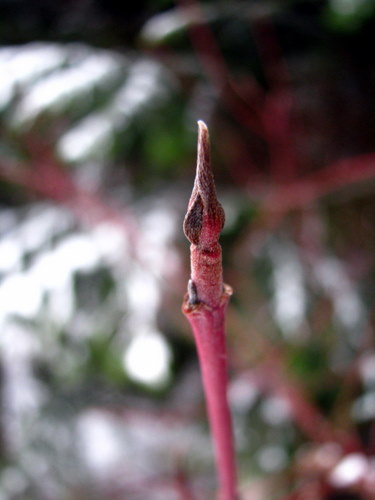
Twig tracking is a fun activity to take part in on a short snowshoe
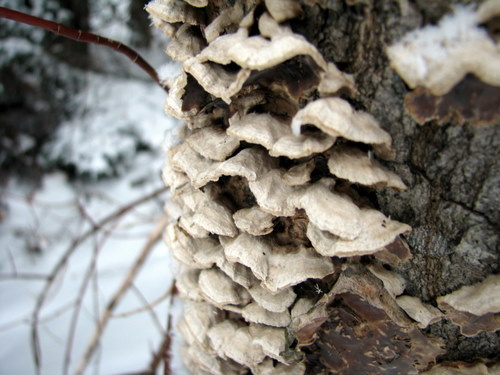 Shelf fungus on this stump curl in the chill winds
This snowshoe venture may not sound the most rigorous, but in winter, I find that the silence and small beauties that I encounter on a shorter route is as rewarding as any high summit. Evidence of squirrel activity through tracks, the tiny cones of a Mountain hemlock dangling like icicles, a water ouzel on the icy shoreline of the pond searching for food. These trails give you time for meditation on matters of the heart and of learning to love a landscape that isn’t always cloaked in the familiar green hue.
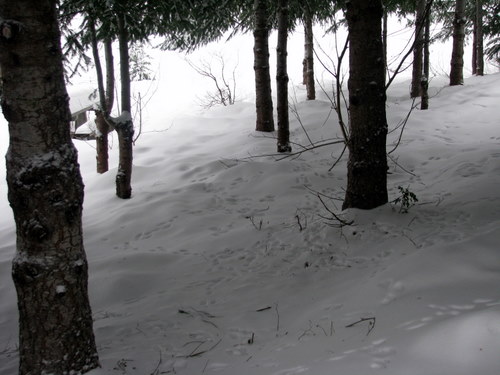 Life abounds, as shown by these tracks, even in the winter climate
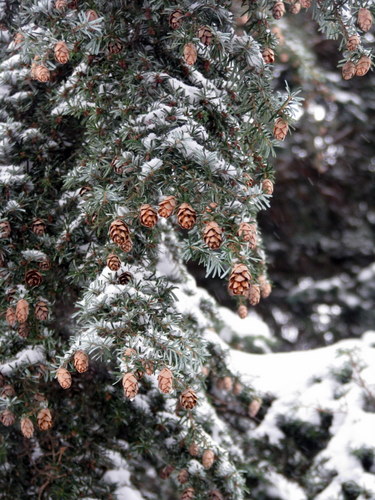
Mountain hemlock cones dangle from its snow-loaded branches
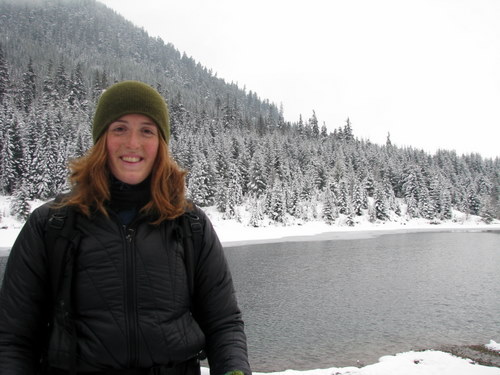 The author at Gold Creek Pond’s northeastern edge
Trails such as Gold Creek Pond can be found nearer to your home than you might think. Any trail as short and simple as this opens up ample opportunities for adventure in the winter mountain landscape, such as twig tracking, bird watching, and identifying different forms of snow.
Before escaping to the mountains on your adventure, be sure to check weather and avalanche conditions on the Northwest Weather and Avalanche Center (NWAC) website to ensure a safe and successful snowshoe trip.
What are some closer, more accessible trails that we can snowshoe in your neck of the woods? Let us at Chattermarks know.
Great pictures as always. I do have one question though, what’s twig tracking?
Twig tracking is a wonderful little natural history sport practiced on here by our first editor, Jenny Frederick, which involves observing the different kinds of deciduous shrubs and trees via their twigs and not-yet-flowering buds in order to identify their species. It allows one to read the landscape when the leaves so often associated with deciduous trees/shrubs are not there to assist in identification. Try it out at home! Take a field guide with you.
Hey! You came to my stompin’ grounds! If you don’t mind driving a little further east, there are some good hikes around Salmon la Sac. I like to go along the Cooper River, or make a loop on the Waptus River trail back to the trailhead. The Blewett Pass area also has some good marked trails. We haven’t had a lot of snow yet, especially further east of the crest and at lower elevations…For more info about snowshoe opportunities on the Cle Elum Ranger District and some winter safety tips, check out cleelumtrails.com.
This post is just what I needed. You gained a new fan right here. Can’t wait for your next post.
Very informative article. I’ve found your blog via Yahoo and I’m really happy about the information you provide in your articles. Btw your blogs layout is really messed up on the Chrome browser. Would be really great if you could fix that. Anyhow keep up the good work!
Deb – thank you so much for your suggestions for snowshoeing! I will be heading eastward in just a week and will try and check out some of those trails you suggested, I even have friends in the Cle Elum area who could show me around. 🙂 Thank you Burl for the heads up, I will try and check with the main editor to see if we can’t get the browser viewing fixed.
I must tell you, your piece goes to the heart of the issue. Your lucidity leaves me wanting to know more. Just so you know, i will immediately grab your feed to keep up to date with your website. Saying thanks is simply my little way of saying what a masterpiece for a remarkable resource. Let In my warmest wishes for your next publication.
Just recently I have learned that there is actually a school for snowshoeing, i just can’t quite remember the name of the school. I have read about snowshoeing a lot these past few days, such us where is the best spot or places to go snowshoeing and other activities done in snow.
It’s enticing and I also wanna see the places in winter which I have never experience before. I think it is too impossible for someone like me cause I live in Asia where it doesn’t snow. Thank you for sharing everything to me…by this it seemed like I already experience it.
http://mattresstopperreview.com