Chattermarks

From North Cascades Institute

Search Chattermarks

2013 Calendar

Field Guide to North Cascades Institute

Archives

fir cone

A week in the woods

June 17th, 2013 | Posted by in Naturalist Notes

Scott Kirkwood is editor in chief of National Parks Magazine, a quarterly publication produced by the National Parks Conservation Association, a nonprofit advocacy organization headquartered in Washington, D.C. This is his first post in a series about spending the summer in the North Cascades National Park.

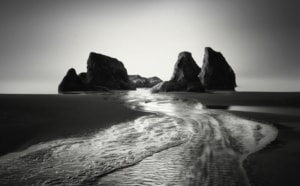
pyramid b&w
pyramid colorTwo perspectives of a snowless Pyramid Peak on summer-like spring days

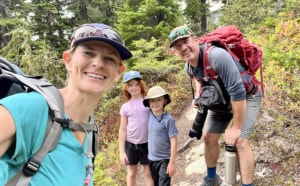
When it came time to plan my sabbatical from the National Parks Conservation Association, where I edit National Parks magazine, I decided to spend a few of those precious 6 weeks at North Cascades Institute. A coworker of mine in Seattle had taken a few classes at the Institute and highly recommended it, so I reached out to the staff and asked if I could teach a few classes in photography and writing, and take a few classes as well. And when I wasn’t doing one or the other, I’d just hike, bike, read, write, take photos, and think really deep thoughts. The folks at North Cascades Institute were immediately on board. So I flew from DC to Seattle on June 8, and the adventure began.

» Continue reading A week in the woods

misty mountains

The message of the rain

May 21st, 2013 | Posted by in Odds & Ends

I’d like to share a poem with you, on this rainy day in Bellingham. It’s called The Message of the Rain:

when i was a child
i was a squirrel a bluejay a fox
and spoke with them in their tongues
climbed their trees dug their dens
and knew the taste
of every grass and stone
the meaning of the sun
the message of the night

now i am old and past
both work and battle
and know no shame
to go alone into the forest
to speak again to squirrel fox and bird
to taste the world
to find the meaning of the wind
the message of the rain

- Norman H Russell

canoe in rain

Leading photo: Looking out from Thunder Knob. All photos by Ryan Weisberg


geneva stewardship 1

What does stewardship look like?

May 16th, 2013 | Posted by in Odds & Ends

At Mountain School, we try to teach our students how to be stewards of the earth. When we visit the students at their school a few weeks after they came to Mountain School, we try to get them to make connections between the environment out here in the mountains and the environments closer to their home and their school. At some of these post-trip visits the students participate in stewardship activities at parks near their school. We wrote about this back in 2011 when we first began facilitating these stewardship events.

Here are some shots from the Sunnyland Elementary stewardship event at Memorial park in Bellingham. The students, their teachers, and Institute staff removed blackberry, mulched and planted red-osier dogwood and Sitka spruce. They also got VERY muddy!

sunnyland stew 1


» Continue reading What does stewardship look like?

Sahara on pony

Reflections from the back of my horse

April 25th, 2013 | Posted by in Odds & Ends

I am on my horse at the Pilchuck Tree Farm in Arlington with my mom. The air is cool and moist; the sun reflects off the glinting dew drops on the foliage repossessing the battered stumps and scars on the landscape. We travel on this trail silently, allowing our horses to navigate this place we have all visited so many times before.

The Tree Farm, once actively logged, is now home to a local recreation association, mostly horsemen and women, who come to this place to seek solitude from motorized vehicles and hunters amongst the recovering forests. My horse’s ears flick forward suddenly as he registers some sound known only to him, but a dismissive swivel back towards me indicates that whatever he heard has not been perceived as a threat.

The world is a different place from the back of a horse.

view from ponyView from the back of Sheena

» Continue reading Reflections from the back of my horse

letters from yellowstone book cover

Letters from Yellowstone: Natural History in the Nation’s Park

April 12th, 2013 | Posted by in Odds & Ends

Letters from Yellowstone is an account of a fictional 1898 botanical survey of Yellowstone National Park, written entirely through letters. Howard Merriam, a professor from Montana is the leader of the group, which includes an entomologist, someone from the Smithsonian, an agriculturalist, and a botanist.

As Professor Merriam is setting up this field study and looking to finalize his team, he receives a letter from an A. E. Bartram at Cornell University. Bartram studies medicine and is very interested in botany, having extensively studied the Lewis expedition (currently, more commonly referred to as the Lewis and Clark expedition) for several years. Professor Merriam is delighted and extends A. E. Bartram a warm invitation to join the team. At the arrival in Yellowstone of said Bartram, however, Professor Merriam is frustrated and discouraged to find that Bartram is in fact a woman, not a man as he had previously assumed from their written correspondence.

monkey flowerMimulus Lewisii, or Lewis’ Monkey Flower. Illustration from the book

The book continues as they set out into the front-country and backcountry to draw, observe, record, name, and take specimens of as many plants as they can find. This is not, however, a story without adventure—throughout their summer, the characters encounter hypothermia, snowstorms, exciting botanical discoveries, sabotage, and wildfire.

» Continue reading Letters from Yellowstone: Natural History in the Nation’s Park

Facing Climate Change in the Pacific Northwest

April 7th, 2013 | Posted by in Naturalist Notes

North Cascades Institute former staffers and current friends Benjamin Drummond and Sara Joy Steele just launched four new films for their multimedia project, Facing Climate Change. Oyster Farmers, Coastal Tribes, Potato Farmers, and Plateau Tribes all explore global climate change through people who live and work in the Pacific Northwest.

These stories came about after one of the project’s partners, the Climate Impacts Group at the University of Washington, released the Washington Climate Change Impacts Assessment. It’s an incredible resource with startling projections for how climate change will impact the Northwest’s future, but it’s also 400 pages and a lot of science to wade through. Benj and Sara’s goal is to put a face to projections like these and to bring new voices into the conversation.

» Continue reading Facing Climate Change in the Pacific Northwest

“Elwha Restoration Revealed” at WWU, April 10

April 3rd, 2013 | Posted by in Naturalist Notes

Join NatureBridge, the WWU Huxley College of the Environment and the North Cascades Institute to hear about the historic Elwha Dam removal and restoration project in Olympic National Park Wedneday, April 10, 7 pm, at Western Washington University Room AW 204.

For the first time in 100 years, the Elwha River is beginning to flow free. As the first chunks of the dams concrete were removed in September of 2011, the river and surrounding ecosystem began to heal: vegetation has emerged on the newly exposed deltas, sediment and nutrients are reaching the Straits of Juan de Fuca and salmon returned last fall!  Restoration!

The dam removal is ahead of schedule with the lower dam removal now complete, with the upper dam likely to be fully removed by the end of 2013.  Each day reveals new images and insights for researchers monitoring this historic event.

Find out how the restoration efforts are progressing from:

  • John Gussman, filmmaker, shows selections from his documentary film in progress, Return of the River.
  • Dr. Jeff Duda, U.S. Geological Survey – Western Fisheries Research Center, shares current research on the freshwater, estuaries and marine ecosystems before and after the dam removal.
  • Stephen Streufert, Pacific Northwest Director, NatureBridge, explains how the Elwha Restoration project has become an ideal laboratory for schools to connect in-class learning with real world experiences at the NatureBridge campus.

FREE EVENT – Registration requested: http://elwhawwu.eventbrite.com/#

For more information, contact Karen Molinari at 206-382-6212 ext 12 or kmolinari@naturebridge.org.

Photos by John Gussman: www.elwhafilm.com


Spring Is On It’s Way

March 24th, 2013 | Posted by in Naturalist Notes

Spring means a lot of things. Growth. New life. Lots of color. Bright greens. Warmth. Sunshine. Rain. Melting snow. Longer days. Last month, cohort 12 graduate students spent a couple days hanging out at the Wilderness Awareness School in Duval, WA. The students there told us about the medicine wheel. The medicine wheel is a circular “wheel” with eight spokes. It can refer to parts of the day, different times of year, cardinal directions, stages of human life… Looking at it, I realized that there is a time for everything, and that if I pay attention to when that time is instead of ignoring it and just making plans, things turn out better. On the medicine wheel, spring falls in the east. It is the time for new beginnings and ideas, change, energy. It’s where the sun rises and the earth wakes up.

Standing around the medicine wheel after we all collaborated in piecing it together with found materials. Photo by Carey French

I can see the earth waking up every time I walk out my front door. Everywhere I look, plants and trees that have been bare and dormant all winter are showing little pops of color as buds form on their branches. The huckleberry is brightly pink and green now, the Red-flowering currant looks ready to explode, the Vine maple’s yellow-white twin terminal buds look toward the sun…

The birds are coming back too—the past couple of days I’ve been seeing and hearing Varied Thrushes, Dark-eyed Juncos, Pacific Wrens, and American Robins all over the place.

Buds on a Red Huckleberry shrub. Photo by Ryan Weisberg
Buds on a Vine Maple. Photo by Ryan Weisberg

Other Institute staff and grad students shared with me their thoughts on the coming of spring…

» Continue reading Spring Is On It’s Way

February 1956

March 4th, 2013 | Posted by in Odds & Ends

At the far end of a trip north
In a berry-pickers cabin
At the edge of a wide muddy field
Stretching to the words and cloudy mountains,
Feeding the stove all afternoon with cedar,
Watching the dark sky darken, a heron flap by,
A huge setter pup nap on the dusty cot.
High rotten stumps in the second-growth woods
Flat scattered farms in the bends of the Nooksack
River. Steelhead run now
a week and I go back
Down 99, through towns to San Francisco
and Japan.

All America south and east,
Twenty-five years in it brought to a trip-stop
Mind-point, where I turn
Caught more on this land—rock tree and man,
Awake, than ever before, yet ready to leave.
damned memories,
Whole wasted theories, failures and worse success,
Schools, girls, deals, try to get in
To make this poem a froth, a pity,
A dead fiddle for lost good jobs.
the cedar walls
Smell of our farm-house, half built in ’35.
Clouds sink down the hills
Coffee is hot again. The dog
Turns and turns about, stops and sleeps.

— Gary Snyder, from Riprap, 1958.
Painting by Clayton James.

Winter Reflection Brings Out The Poet

February 26th, 2013 | Posted by in Life at the Learning Center

I was sitting in my house, thinking, and the first few lines of a poem that I haven’t thought of in years popped into my head:

“In winter I get up at night
and dress by yellow candle light.
In summer, quite the other way,
I have to go to bed by day.”

It was written by Robert Louis Stevenson, and appears in A Child’s Garden of Verses.

My family has always been pretty into poetry. My parents have an entire bookcase at home dedicated to their poetry collection. It’s something that has, in a way, been passed down to me. I can recite almost every poem my dad uses as openers for speeches. I have started my own small collection of poetry books. Sometimes I sit in the library and copy my favorites into my journals. And I write my own. Not all the time—sometimes months go by with nothing. But there’s something about a good poem, one that I connect to, that stirs something inside me.

The first book of poems I ever bought was Eating Bread and Honey by Pattiann Rogers. It was 1997. I was ten years old. I’m not sure why I bought it, but I remember going to her book reading at Village Books in Bellingham, and I remember it being a big deal. And then I decided that I didn’t really like poetry after all. I’m not sure where that book is now, but the memory of the experience is seared into my brain forever.

» Continue reading Winter Reflection Brings Out The Poet