Chattermarks

From North Cascades Institute

Search Chattermarks

2012 Catalog

Archives

April Adventures at Mountain School

April 24th, 2012 | Posted by in Graduate M.Ed. Program

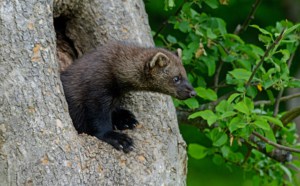
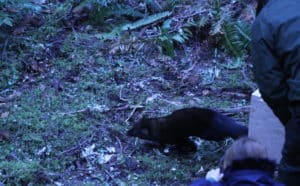
The month of April began with a week of Mountain School like no other I’ve experienced in the eight months I have lived, worked, and studied at North Cascades Institute. April showers, instead of bringing May flowers, brought the opportunity to co-teach with National Park Service Ranger, Carolyn Waters. A typical trail group generally consists of 8-12 elementary students (usually 5th grade) who spend three days covering a single curriculum. In place of an energetic group of eleven year olds, however, Ranger Carolyn and I eagerly greeted five eighth grade girls. In the course of one week, two curricula were examined, torrential downpours were taken in stride, Pojars (our ever-present field guides to the Pacific Northwest region) were eagerly riffled through, and hypotheses were formed and tested. Our week of field-based learning brought opportunities for research, hands-on discovery, and a lot of laughter. In between studying transects for signs of the American Marten, these International School students enjoyed yoga, chose to watercolor along the shores of Lake Diablo, and strengthened bonds of friendship with their peers.

» Continue reading April Adventures at Mountain School

Entering the Ethereal Forest

April 12th, 2012 | Posted by in Adventures

This past weekend dawned sunny and warm in the North Cascades, an unexpected delight for those of us electing to live out the winter in the solitude of the snow-capped peaks and hushed forests around the Environmental Learning Center. Although spring has reportedly been blooming down along the Skagit Valley, our world has remained snowy, rainy, and cold. And if by chance we forget, the closure of Highway 20 just a few miles to our east reminds us it is so. Eager to take advantage of the sun and rare blue skies, a group of 6 of us – staff, grads, and friends – decided to canoe up into the big drawdown of Ross Lake and spend a night under the stars.

We began our 22 mile canoe trip first in the wind-chopped waters of Diablo Lake, some of us (myself included) wondering what we were getting ourselves into. After an hour of paddling, we reached the boat dock at the end of Gorge Canyon, and hitched our canoes to a few wobbly, old, and very janky wheel gurneys in order to portage our boats up and over 540 ft tall Ross Dam to Ross Lake. It was a haul to say the least, and a huffing and puffing adventure at that. On the other side we were greeted by a stunning view of Jack Mountain, and chose to have lunch at the water’s edge, mesmerized by the beauty mountains in every direction.

Kai Girard portaging one of our canoes up the service road between Diablo and Ross Lakes. Photo by the author.

Surprisingly, the wind died down on Ross Lake, and our group paddled along in excited anticipation for every new peak and vantage awaiting us around each corner. It wasn’t long before Ruby Mountain came into view, a delight for me after months of barely glimpsing the tip of it, concealed as we are so far below along Diablo Lake. The water was glass, and each canoe of two spread out along its width as if responding to the naturalness of its quiet and its calm. It felt good to be out on water, moving ourselves by the strength and consistency of our paddles.

» Continue reading Entering the Ethereal Forest

North Cascades Wild Stewardship at the Marblemount Native Plant Nursery

April 4th, 2012 | Posted by in Graduate M.Ed. Program

On a cold and rainy March morning last weekend, North Cascades Wild 2012 students pulled into the Marblemount Wilderness Information Center with smiles. Piling out of North Cascades Institute vans piloted by staff Amy Brown and Tasha Lexin, 17 high school students from Whatcom and Skagit counties began their journeys with one of the Institute’s tuition-free Summer Youth Programs.

North Cascades Wild brings underserved youth from Washington and Oregon to the North Cascades National Park and Mount Baker-Snoqualmie National Forest for 8 and 12-day summer wilderness expeditions. With a focus on developing leadership skills and learning about the natural and cultural history of the area, students spend time learning to canoe, camp, backpack, and complete service projects for the Park and Forest services.

» Continue reading North Cascades Wild Stewardship at the Marblemount Native Plant Nursery

C10 Graduation: A Celebration of Endings and Beginnings

April 1st, 2012 | Posted by in Graduate M.Ed. Program

March 15th marked a day of celebration for Cohort 10 graduate students at the end of a long journey as they completed their Master’s in Environmental Education from Western Washington University and received certificates in Leadership and Nonprofit Administration from the North Cascades Institute.

Institute staff and current Cohort 11 graduate students were joined by family and friends of Cohort 10 at the Environmental Learning Center to honor the achievements of this talented, lively, and inspiring bunch: Teresa Mealy, Kate Rinder, Stephanie Bennett, Codi Hamblin, Stephanie Pate, Nick Mikula, Clint Hensley, David Strich, Cece Bowerman, Elizabeth Penhollow, and Scott Davis.

C10 graduate students have spent the last two years living, learning, and teaching together while immersed in the natural world extending from the peaks of the Cascade mountains to the coastal waters of the Puget Sound. This group came together in June 2010 in Bellingham for a summer of exploration before moving to the Environmental Learning Center in North Cascades National Park to begin their year-long residency. During that year, these students gained hands-on experience as educators and staff working for a variety of Institute programs, including Mountain School, Base Camp, Family Getaways, Adult Programs, and Summer Youth programs. In the winter, Cohort 10 focused on project-based coursework in curriculum development and nonprofit management as they gained skills and understanding in how nonprofit organizations work, grow, and thrive. This year-long experience also provided opportunity for these students to cultivate a deeper connection to the North Cascades and to each other as they explored the region by foot, canoe, ski, and snowshoe.

Following the residency, the grads returned to Bellingham to spend their last two quarters back at Western Washington University’s campus where they applied their experience in the mountains to educational theory and various in-depth research projects.

» Continue reading C10 Graduation: A Celebration of Endings and Beginnings

Following the Snowy Owls

March 19th, 2012 | Posted by in Field Excursions

Since first moving to the Environmental Learning Center last August, many people have told me, “You must go see the snowy owls!” This advice has been on my radar since migratory birds began returning to their winter feeding grounds in the Skagit Valley. Who are these snowy owls that everybody speaks of? After doing some research, I learned that not only were these birds magnificent and beautiful creatures, but that this was an unusual year for the North American Snowy Owl. This year is known as an “irruption” year. An irruption is caused by a shortage in the Artic lemming population in the Arctic Tundra of Canada. As a result, snowy owls, whose primary food source are lemmings, must travel in search of additional food and can be found as far south as the United States. This event occurs every four to seven years as predator-prey dynamics change, and in those years snowy owls can be found in hospitable places like Boundary Bay Park in southern British Columbia and occasionally along the Skagit Flats in Washington. The owls are expected to return north sometime this month.

In anticipation of their departure, I knew a trip over the border to Boundary Bay had to be made. The snowy owls were also spotted just north of Bellingham at Sandy Point, but the word on the birder streets was that it was possible to see 20 to 30 of them at once in British Columbia. So we chose to cross over, and the adventure was well worth it.

Here are some pictures from our wondrous day with the snowy owls.

Just off of 72nd Street in Delta, BC, we were lucky enough to witness about 25 snowy owls hanging out along the dyke path in Boundary Bay Park.
These large owls breed in the Artic Tundra, and as you can tell by their unmistakable white plumage they probably blend in very well up there. Females and juveniles are more heavily marked than males. Adult males can be almost pure white.

» Continue reading Following the Snowy Owls

White Peaks, Bluebird Skies, Flapping Wingbeats

February 27th, 2012 | Posted by in Graduate M.Ed. Program

As graduate students spending a year at the North Cascades Environmental Learning Center, winter is a contemplative and focused time – a time of respite from teaching Mountain School programs to work on group projects for our nonprofit and curriculum classes. This work, along with an in-depth research project on a Natural History topic of our choosing, comprises the bulk of our academic studies.

This kind of project-based learning allows for us to structure our studies around time spend outside naturalizing and exploring the winter world of the Cascades. A canoe paddle on Diablo Lake breaks up hours of writing and research while giving us a chance to feel inspired by icicles clinging to rocky cliff ledges near Thunder Knob. A hike up to Buster Brown Field allows us to the breath in the deep, crisp air while listening for golden-crowned kinglets that have just returned from their winter migrations. Feeling reenergized, we are able to focus again on the work at hand.

As much as we cherish these opportunities to explore the natural world just outside our doorsteps, sometimes we need time away in different places altogether where new adventures, learning, and inspiration can occur. Cohort 11 recently returned from just such an adventure: A three-day Winter Graduate Retreat at Mount Rainier National Park and the Skagit Flats.

A red fox curled up in the snow. Above, the moon rising in an alpine glow sky at Mount Rainier. Photo by Jess Newley.

We began the retreat with bluebird skies and a four-hour car ride that landed us at the base of Mount Rainier. Many of us were so eager to begin our adventure at the Park that we drove straight up to Paradise Meadows on the southwest face of the mountain at 5,400 ft. After orienting ourselves to the winter ecology, glaciology, and geologic history of the Park at the Visitor’s Center, graduate students dispersed to explore this singular volcano in the Cascades Range. In just a few short minutes of hiking around, a number of us turned to see a red fox sauntering along the trail beside us. We gasped, looking around in wonder as a second fox, this one a silver morph of the first, came quietly behind it. Both had their noses to the ground, and neither seemed to be paying us, or their proximity to the parking lot of Paradise, any mind. These habituated foxes were simply out for a dusk perusal of their territory and feeding grounds. Having never seen a fox at such close distance myself, I was delighted. We watched them for a time, following their trails into the trees. Looking up, we spotted a porcupine in a subalpine fir above our heads munching on needle buds and dropping pellets onto the snow. An hour at the Park and already the wildlife count was up! Our first day ended with a stunning sunset and alpine glow across the wintery beauty of Mount Rainier.

» Continue reading White Peaks, Bluebird Skies, Flapping Wingbeats

A Snowy Exchange with Environmental Educators

February 1st, 2012 | Posted by in Graduate M.Ed. Program

“We need someone to plan the second portion of our three part Instructor Exchange with the graduate students and teaching apprentices from IslandWood and Wilderness Awareness School immediately after winter break.”

 Um, okay.

In less than two months, three novice event planners would host a group of 60 environmental educators at their secluded home in the mountains. What now? Dreams and plans, of course!

This meeting of the minds happened January 14th - 16th at the Environmental Learning Center tucked up in the splendor of the North Cascades National Park. We are lucky to have a landscape here along Diablo Lake that is quite beautiful and unique – our own special place we call home and love to share with others. This was the driving undercurrent behind what we hoped our weekend would be together.

Some friends from IslandWood and Wilderness Awareness School exchange exclamations during a breakout session. Photo by Jess Newley.

» Continue reading A Snowy Exchange with Environmental Educators

Graduate Students Attend Environmental Education Conference

December 23rd, 2011 | Posted by in Graduate M.Ed. Program

Students in the M.E.d Graduate Program celebrated the start of winter break with the Strait Talk, Sound Ideas Conference on Bainbridge Island from December 11th through 13th. As part of a series of three Instructor Exchanges aimed at sharing ideas and experiences between Environmental Education graduate programs in Washington, this conference kicked off the set hosted each by Islandwood, the Wilderness Awareness School and the North Cascades Institute.

Strait Talk, Sound Ideas brought together naturalists and outdoor educators at the Islandwood campus for keynote speakers, workshops and breakout sessions. The three-day event began with an evening of sharing songs and skits and served as an introduction to each other and our programs. Participants took advantage of one of the most beneficial parts of a gathering like this, the informal conversations and discussions about each other’s work in the field of Environmental Education.

» Continue reading Graduate Students Attend Environmental Education Conference

Swimming with the Salmon

November 11th, 2011 | Posted by in Adventures

“I think we’re going to the moon because it’s in the nature of the human being to face challenges. It’s by the nature of his deep inner soul… we’re required to do these things just as salmon swim upstream.” ~ Neil Armstrong

In the fall, the Skagit River is flooded with dying salmon. I have spent three weekends in the past two months trying to capture the essence of these amazing creatures on camera. I am still not sure whether I succeeded in doing so, but I am happy to share my experiences.

Hanging out with snorkeling gear in 36-degree water probably isn’t everybody’s favorite thing to do, but since I moved up to the Environmental Learning Center, it has become my preferred hobby. The place I like to go is the Cascade River just upstream of where it enters the Skagit. When the salmon are running, you know where to find me!

There’s something extraordinary about being amongst these primordial beings and watching them in their natural habitat. It’s like I get to peer in through a secret window into the lives of one of nature’s wildest creatures. While watching the fish swarm around me and make their redds, defend their territory, court a mate, or just plain get feisty with each other, I begin to understand a little more of the complexity of this species. I don’t know their whole story, but I try to imagine all they have been through. Seeing their scars and bacteria loaded scales gives me a clue.

A dying, diseased female humpy on the final legs of her journey back to her native spawning grounds.

» Continue reading Swimming with the Salmon

Finding Community in the North Cascades

October 19th, 2011 | Posted by in Graduate M.Ed. Program

“Making your way in the world today takes everything you’ve got. Taking a break from all your worries sure would help a lot. Wouldn’t you like to get away? Sometimes you want to go where everybody knows your name! And they’re always glad you came! You want to go where you can see people are all the same. You want to go where everybody knows your name.” - Cheers’ Theme

The lyrics from that familiar childhood song ring true and clear to me these days, perhaps more so than they used to. Having recently moved to the North Cascades Institute’s Environmental Learning Center, I feel not only transported to a different place, but to a different time as well. Similar to the friends from Cheers who, at the end of each day, gathered on bar stools to clink mugs together and exchange stories, I look forward to seeing familiar, friendly faces around the kitchenette table, sipping tea or coffee and swapping light-hearted tales of the day. And yes, up here, everybody knows my name. And I, theirs.

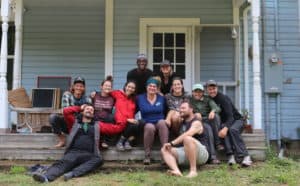
It might be hard to imagine within the context of today’s constantly connected and communicating world, but picture a small, remote community consisting of twenty-five people. Tucked up in a beautiful corner of the world, this community is surrounded with towering snow-capped mountain peaks, glacial fed lakes and rivers, and trails greener than any you have ever seen. This community lives together: at least one hour from any fully equipped grocery store and two hours away from other “basic amenities” (a hospital, for example). This community works together: some days from seven o’clock in the morning until nine or ten at night – full days that usually require a special kind of energy and attentiveness for engaging with youth. This community plays together: at the end of a long week, down time affords opportunities to climb mountains, canoe across icy turquoise waters, and find hidden sit spots just off trail that allow for peaceful reflection on the brilliant, changing colors of our vine maples. This community doesn’t have cell phones (at least not ones that get reception). And most importantly, this community comes together as a group of individuals, often separated from families and partners by great distance. This community is home away from home. This community is a family – my family. This community is the North Cascades Institute.

Part of the ELC family enjoys dinner together. Photo by Katie Tozier.

» Continue reading Finding Community in the North Cascades