Chattermarks

From North Cascades Institute

Search Chattermarks

2012 Catalog

Archives

group canoeing

Cascades Climate Challenge Leaders: Coming to a community near you

August 2nd, 2011 | Posted by in Youth Adventures

Sixteen high school students hailing from Oregon and Washington arrived in the North Cascades on June 26th to begin an unforgettable adventure. These young leaders came to participate in the third year of Cascades Climate Challenge, one of North Cascades Institute’s youth programs. The youth started off by splitting into two groups to go on 12-day backpacking and canoeing trips on and around Ross Lake. For many, this was the longest time away from home, the first time paddling a canoe, and the most physically challenging experience they have had.

group on bridge

CCC2 stands on a bridge over rushing Lightning Creek

canoers

CCC1 canoers “raft up” in the mouth of Devil’s Creek

Students learned many new skills each day, in addition to lessons about climate change, invasive species, presenting and naturalizing. Everyone took turns cooking meals, cleaning up following Leave No Trace guidelines, building fires, and leading the group. Spending so much time in North Cascades National Park (NCNP) provided a great opportunity for hands-on service work, and a chance for the students to give back to the park they were learning and living in. Mike Brondi, volunteer coordinator for NCNP, met up with both groups to teach them about invasive reed canary grass, which the students pulled in order to promote native grass growth. They also planted native seeds to restore the banks of Dry Creek and cleared the trail between Hozomeen and Willow Lakes.

students in bear box

Members of CCC1 manage to fit six people in a bear box

doing dishes

Students took turns cleaning up after each meal

Each group’s 12-day trip included waking up at 5am one morning to climb up Desolation Peak, gaining breathtaking views of snow and glacier-capped mountains, at the expense of one thousand vertical feet per mile. Youth who had been strangers on the first day supported each other like family, encouraging one another to the top of the mountain. This was just one of innumerable moments of awe and inspiration on the trips: listening to eerie loon calls at Hozomeen Lake, paddling silently to the mouth of Devil’s Creek, or holding 20,000 year old pieces of wood flattened by glaciers, preserved in clay next to the Skagit River.

canoes below desolation

Canoes float below Desolation Peak, about to paddle their hikers to the Desolation trailhead

group on desolation

CCC2 poses in triumph, with Jack Mountain and Ross Lake as a backdrop

After the two smaller groups completed their “backcountry” trips, they reunited at the Learning Center for the luxuries of “front country” camping, and ten days of focusing more intently on the science of climate change and its impacts on the North Cascades. Students met with specialists like NCNP geologist, Jon Riedel, to learn how climate change is affecting the park’s glaciers, Gina DiCiccio, NCNP climate change intern, and Katie Fleming from the Cool School Challenge. Their lessons allowed students to explore a variety of ecosystems, including Baker Lake, Baker River, Thunder Knob, Rainy Lake and Diablo Dam powerhouse.

tents

By the end of the trip, students were experts at tent construction

rainy lake

Students hiked the still-snowy trail to breathtaking Rainy Lake for lessons about glacial landforms
After some rainy nights camping at Newhalem campground, resulting in the overnight formation of tent lakes, the group returned to the Learning Center for their culminating project: putting together an hour-long presentation and lessons on their experience, what they learned and how the students will be applying their new knowledge when they return home. The students shared this with the Kinship Conservation Fellows, a group of eighteen international leaders who are actively working to integrate a practice of conservation and environmental awareness into business. The students in turn got to learn about some of the kinds of jobs they could pursue to help preserve the environment they are so passionate about.

snorkeling

A student snorkels in Ross Lake, looking for small red-sided shiner fish

Twenty-two days after these sixteen students first came to the Cascades, they had to find a way to say goodbye to both a place and a community that had become a home and a family. As instructors, we hope that the students left with as much inspiration and confidence as they gave us. Getting to teach, lead, and mentor such exceptional young adults is a privilege. Spending three full weeks 24/7 watching these youth grow individually and as a group is a process that, while exhausting, is simultaneously one of the most rewarding experiences an educator can have. These bright-eyed and enthusiastic youth remind me of myself at a younger age, which gives me hope that they will continue becoming leaders that will not settle for “business as usual” and a planet that cannot support the systems and amazing organisms we cherish. NCNP maintenance foreman Gerry Cook shared the following words with the members of Cascades Climate Challenge, which they have all taken to heart: “I cannot change the world, but I can change the world around me. And if we change the world around us, we will change the world.”

group shot

Photos courtesy of Hannah Cameron and CCC instructors Tasha Lexin, Megan McGinty, Dave Strich, Aneka Singlaub and Kate Rinder.

Summer Youth Preparation Begins!

June 10th, 2011 | Posted by in Institute News

Mountain School is not yet over but the summer youth program team is already pulling big shifts and long hours in preparation for the arrival of the Cascade Climate Challenge and North Cascades Wild students. Countless calories must be packed and cached, payloads of gear have to be inventoried, cleaned and organized and mounds of student information needs to be reviewed and entered into spreadsheets. We assembled a few photos shot during the week to give folks a behind-the-scenes look into summer youth programs.

Ian, Amy and Kevin review equipment options.
(12 x 10 x 8) + (2 x 20 x 4) = ??? Tasha evaluates the food-packing progress.
Ian and Scott inventory and grade the condition of the equipment.
Amy outlines the structures and goals of the two summer youth programs in a presentation to new staff.
Still smiling, Kate prepares a bucket to be cached at the Ross Lake Resort.
Ian lays out the objectives of an instructor skills session.
One of the many spreadsheets and organizational charts we create and use.
102, 103, 104… Program T-shirts are inventoried.
Still packing food. Clint orders Codi to quit dancing and get back to work. Fortunately, she is ignoring him.
Photos by Megan McGinty and Codi Hamblin


Building Community Through Stewardship

May 31st, 2011 | Posted by in Youth Adventures

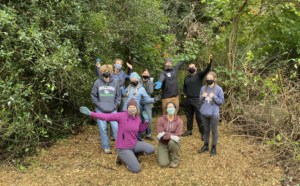
Stewardship and friendship were at the heart of the efforts during the third North Cascades Wild spring day trip in May. More than a dozen participants from Whatcom and Skagit counties came together at the North Cascades Environmental Learning Center as a final chance to meet with their peers before we set out together in the wilderness this summer.

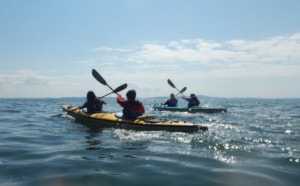
Some program participants met earlier this spring to volunteer a day of service at North Cascades National Park’s native plant nursery and also attended the Migratory Shorebird Festival at the Padilla Bay National Estuarine Research Reserve. This day’s trip was set aside for NC Wild participants and staff to volunteer during North Cascades Institute’s annual Stewardship Weekend, an event bringing volunteers of all ages together to assist in plant restoration efforts on Learning Center grounds. It was also a chance for NC Wild youth to familiarize themselves with both canoe and paddle, as it will serve as a mode of transportation for the program.

This summer these students, as well as others from Northwest Washington, will embark on 12-day backpacking and canoe wilderness expeditions in North Cascades National Park and Mount Baker-Snoqualmie National Forest. During these trips participants will focus on leadership development, community building, sense of place and stewardship. Spring and fall day trips, such as this one, provide a chance for students to build community through service work.

» Continue reading Building Community Through Stewardship

NC Wild Springs into Stewardship

April 3rd, 2011 | Posted by in Youth Adventures

Many hands make light work.

An old saying at the forefront of my mind throughout the first North Cascades Wild spring day trip. A dozen NC Wild participants, several North Cascades Institute instructors and national park staff came together for a day of stewardship work at the North Cascades National Park native plant nursery in Marblemount. In addition to providing some service to the nursery, the effort was also a chance get to know each other and begin building community among NC Wild participants and staff.

These students from Whatcom and Skagit counties, as well as others from Northwest Washington, will embark on 12-day backpacking and canoe wilderness expeditions in North Cascades National Park and Mount Baker-Snoqualmie National Forest. During these trips, participants focus on leadership development, community building, sense of place and stewardship. Spring and fall day trips, such as this one, provide a chance for students to build community through service work.

In the North Cascades, signs of spring are before us, as the dark, cold days of winter slowly transform into longer, warmer days, signaling the time to prepare the Park’s nursery for the busy growing seasons of spring and summer. This meant much work was needed to de-winterize the facility and promote healthy plant growth.

» Continue reading NC Wild Springs into Stewardship

A Confluence of Young Leaders

November 17th, 2010 | Posted by in Institute News

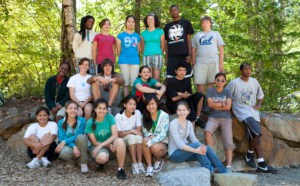
Last weekend, North Cascades Institute partnered with North Cascades National Park and Mount Baker-Snoqualmie National Forest to offer the North Cascades Youth Leadership Conference, “A Confluence of Young Leaders” Nov. 12-14 at  the North Cascades Environmental Learning Center. The conference included students from nearby communities such as Seattle, Mount Vernon and Concrete, Wash., as well as representatives from as far away as Wenatchee, Wash., and Pendleton and Astoria, Oreg. All of these students have participated in a program on public lands such as Cascades Climate Challenge, North Cascades Wild, International District Housing Alliance WILD, or Youth Conservation Corps. Many of the student leaders are first generation Americans, born in places like Bhutan, Cameroon, Eritrea, Ethiopia, India, Mexico, Nepal, the Philippines and Somalia. All of them were motivated by the power of the North Cascades environment and came to this conference to further develop their leadership skills so that they can help protect this special place. I went hoping to inspire the 48 high school students to become even stronger environmental leaders, and I left inspired by their hope and leadership.

» Continue reading A Confluence of Young Leaders

North Cascades Wild’s service in Seattle

October 23rd, 2010 | Posted by in Youth Adventures

September 25th marked a special day for North Cascades Wild.

It was a day of reconnection—seeing the friends that were made over the past summer’s 12-day trips in North Cascades National Park and Mt. Baker-Snoqualmie National Forest. It was a day of remembering—recalling the beauty of the locations visited, the dedication of the people met, the laughing at silly photos. It was a day of reestablishment of a sense of place—reminding each other of the value of remaining stewards of our public lands and giving back, whether it be a Wilderness or a public park.

The 2010 North Cascades Wild Reunion was held at Seward Park in Seattle on a beautiful fall weekend day. Students from Skagit and Whatcom counties, Shoreline, Seattle, and Tukwila all gathered together at the Seward Park Audubon Center with the intention of connecting, yet again, but in a new time and setting.

» Continue reading North Cascades Wild’s service in Seattle

The end of summer on Ross Lake

October 19th, 2010 | Posted by in Youth Adventures

The final North Cascades Wild trips of the 2010 summer embarked on their Ross Lake adventures during the middle of August. A total of eighteen students from Skagit, Whatcom, and King Counties and six instructors spent twelve days forming community, practicing leadership and outdoor skills, doing stewardship work, and learning about and exploring their extended backyard. Highlights from the trips include canoeing on Ross Lake, a silent canoe in Devils Creek Canyon, meeting and working with North Cascades National Park employees, backpacking, exploring ideas of wilderness and Wilderness, star gazing, shared laughter, meeting supporters of NC Wild on the Ross Lake Mule, campfires, and hiking Desolation Peak.

Trip 5 on the dock at Ross Lake Resort. Title photo: North Cascades Wild students canoeing on Ross Lake.
Trip 6 at the Ross Dam Trailhead.

For our stewardship projects, these trips worked with North Cascades National Park trail crew to expand Deer Lick camp to accommodate larger groups (such as North Cascades Wild!). Students and instructors swung Pulaskis and sledgehammers, wrestled root wads out of the ground, dug out layers of duff in order to create new tent pads and trails to them, built a new cook site and campfire ring, and rerouted a trail to the toilet. Mike Brondi, North Cascades National Park, led students in collecting seeds to be grown at the NPS nursery in Marblemount, removing invasive species, and replanting an area using plants grown at the nursery from seeds collected by previous NC Wild groups. Mike also taught the students about the importance of fire to some tree species in the North Cascades ecosystem, specifically lodgepole pines to open their serotinous cones, by burning potato chips and showing how the cones opened up as a result of the heat. Students also had the opportunity to assist with research being done in the park. From canoes and snorkeling in Ross Lake, students observed red sided shiners and recorded information about their location and behavior, as well as collected data about the water.

Jason, Jealisa, Cleo, and Marcus with one of the roots they removed at Deer Lick.

» Continue reading The end of summer on Ross Lake

NC Wild begins fall exploration

September 27th, 2010 | Posted by in Youth Adventures

To explore your own backyards and expand your sense of place—this was the central goal of the 2010 North Cascades Wild’s (NC Wild) first fall day trip, held on Saturday, September 18th.

Sense of place. What is that? Ask any of this year’s students of NC Wild and they would be quick to tell you an answer. As one of the four core themes we emphasize in NC Wild, sense of place is embodied by a student’s increased awareness of and appreciation for the history—both through nature and culture—of a landscape. And the landscape of choice for September 18th’s day trip was that of Blue Lake and Dock Butte, in the Mount Baker-Snoqualmie National Forest.

Easily bypassed for the more popular Mt. Baker National Recreation Area at Schreiber’s Meadows, tucked away among Pacific silver firs and Mountain hemlocks, Blue Lake and Dock Butte afford amazing access to subalpine flora and fauna, geology and hydrology, and astounding views of the North Cascades with only minimal effort.

(Title) Mt. Baker as viewed from the road ascending to the Blue Lake and Dock Butte trailhead (Above) Which way to chose? You can access both Blue Lake and Dock Butte from the same trailhead

» Continue reading NC Wild begins fall exploration

Climate Challenge students explore hydropower at the Diablo Powerhouse

September 24th, 2010 | Posted by in Youth Adventures

By Elisabeth Keating, Guest Blogger

On a scorching Sunday morning in August, the Climate Challenge students headed a few miles north from our riverside campground on Highway 20. Our destination: Diablo Powerhouse is a key link in the massive Skagit hydroelectricity project which provides 30-40 % of Seattle’s power supply. Our classroom for the day, the Diablo Powerhouse, has a rich and storied place in the history of Seattle. It opened in the 1930s, was built before Hoover Dam and before Grand Coulee Dam, and had the biggest hydro generators in the world when they were installed.

The three Seattle City Light dams on the Upper Skagit River in the Cascade Mountains today produce about 40 percent of the electrical power consumed in Seattle. The dams are located along a 7 to 8 mile section of Skagit River. Starting downriver and proceeding eastward toward Canada they are in order Gorge, Diablo, Ross.
 

Today’s goal: To learn about hydro energy–a major renewable energy resource of the Pacific Northwest.

The Cascades Climate Challenge program isn’t just about climate science and the effects of climate change on the Pacific Northwest, lead Climate Challenge instructor Aneka explains. It’s also about finding solutions, and alternative energy is a concept we like to explore in depth. Another primary focus of the program is leading the students to think for themselves. Through the exploration of the Diablo Powerhouse, we’re encouraging the students to think critically about the effects of climate change and solutions as they related to sustainable communities in the Pacific Northwest. Making the connection between glacial retreat and healthy salmon populations can be simple but adding the human component of energy dependence and alternatives to coal power deepen the conversation.

» Continue reading Climate Challenge students explore hydropower at the Diablo Powerhouse

Teaching Climate Change: Tips from Park Rangers

September 22nd, 2010 | Posted by in Youth Adventures

By Elisabeth Keating, guest blogger

How can you help kids retain their learning when you’re teaching something as complex as climate change?

These tips from park rangers Will George of Lewis & Clark National Park and Autumn Carlsen of North Cascades National Park can help convey climate change to children in a compelling and powerful way.

• Focus on telling stories, not bombarding kids with boring abstract statistics.
• Involve the kids with interactive exercises like movement, song, and quizzes. You might ask kindergarteners to paint recycling bins, for example.
• Use puppets and other props to teach abstract topics.
• Keep it local. Talk about how climate change will impact the world kids know. For example, kids in the Pacific Northwest understand salmon and watershed topics. Kids who live in mountains might relate better to stories about pika and bear habitat shrinking. City kids might relate to hotter summers and needing to use more air conditioning.
• Have fun and show how we all benefit from taking care of the planet. Taking care of the planet doesn’t have to be depressing or boring. Think, “Less stuff equals more fun!”
• Set measurable, clear goals and objects for what students will learn.
• Check in frequently with your audience to assess how you’re doing. For example, as we ate lunch, the rangers asked the students to close their eyes and answer a question with a thumbs up, thumbs down, or middle thumb sign: “Think about what we did this morning. How helpful was the map we looked at the morning in learning about the North Cascades”? There’s a universal display of enthusiastic upturned thumbs. “That’s a great, very quick assessment technique to use with little kids when you’re teaching” they explain. “Be sure to check in regularly and make sure they’re interested and staying with you.”

One more tip from a recent New York Times article, Forget What You Know About Good Study Habits, reveals new cognitive research that seems to prove that the brain retains knowledge best when the study environment is varied.

“The brain makes subtle associations between what it is studying and the background sensations it has at the time, the authors say, regardless of whether those perceptions are conscious. … Forcing the brain to make multiple associations with the same material may, in effect, give that information more neural scaffolding.

“What we think is happening here is that, when the outside context is varied, the information is enriched, and this slows down forgetting,” said Dr. Bjork, the senior author of the two-room experiment.”

If so, the Cascades Climate Challenge students should have no problem retaining the knowledge they’ve gained in the North Cascades. In the 2 days I spent with the students, our classrooms varied from the map diorama in the North Cascades Visitors Center to an auditorium where we watched an excerpt from a documentary, to an outside deck with a view of the Pickett Range, to a rocky riverbank to the inside of a tree to a cedar platform overlooking a 1400-year old ceremonial cave, to a campfire, to a humming Skagit River powerhouse. And that was one of the tamer weekends!

Elisabeth will be posting more stories from her time spent with the Cascades Climate Challenge over the coming days — stay tuned, and a big thanks to her for visiting us and writing about it in turn!

Top photo of Autumn by Rick Allen; bottom photo of Chip Jenkins and the Climate Challenge students by Benj Drummond.