Chattermarks

From North Cascades Institute

Search Chattermarks

2012 Catalog

Archives

News from the Kitchen

November 2nd, 2011 | Posted by in Life at the Learning Center

[We are excited to publish the first piece in our Foodshed Series, with monthly updates from the amazing chefs working so hard to provide program participants and staff at the Environmental Learning Center with sustainable, seasonal, and deliciously fresh food. In an age where the production and consumption of food are heavily disconnected, we work hard to preserve those ties by considering how food flows from the farms to our tables and all the processes in between. Purchasing from local farmers allows us to draw connections between their livelihoods and our own while at the same time contributing to our mission to conserve Northwest environments through education. It's a renewing and rewarding partnership, and one we hope to keep sustaining and growing.]

Seasonality is a major component of the Foodshed Project at the Environmental Learning Center. By the time the leaves begin to yellow and fall, our refrigerator has already undergone several transformations. Tomatoes, cilantro, peppers and summer squash have made way for apples, hardy greens and, of course, the venerable pumpkin among other winter squash. Making use of our freezer space, we’ve managed to put up a decent supply of sweet corn off the cob as well as organic blueberries from Blue Heron Farm in Rockport and strawberries from Viva Farms in Burlington. It’s a pleasure to be able to preserve these great local products in the shoulder season. With some luck we’ll save some for the dark months as well.

Sights like these are now fond memories of months past.

» Continue reading News from the Kitchen

Reflections on the 12th Annual Thunder Arm Writing Retreat

October 26th, 2011 | Posted by in Life at the Learning Center

As members of the current M.Ed. graduate cohort, we often have opportunities to assist with North Cascades Institute programs and courses outside our regular teaching schedules. Last month I had the awesome opportunity to assist and participate in the 12th Annual Thunder Arm Writing Retreat offered at the Environmental Learning Center. Poet Tim McNulty and essayist Ana Maria Spagna led three dynamic days that dug deep into self-exploration through prose. Below I’d like to highlight my experience and reflections of the retreat and showcase a poem I wrote over those inspiring days.

I’m an Environmental Educator with an English degree. Simply put, I love reading. Reading has the ability to transport the reader and as a result has enchanted me my entire life. When I volunteered for the retreat it had been some years since I last wrote creatively but only a few weeks since I’d delved into a book. In school I was trained to dissect another’s writing through close reading and critical analysis, not to freely capture my own thoughts through creative writing. The essay for me historically evokes a sense of drudgery, as words like “term paper” and “final exam” flood into my mind. At the beginning of the second day of the retreat, Ana Maria gave a craft talk titled “Peeling Back: The Movement toward Honesty in the Personal Essay.” Through group free-writing exercises she demonstrated how the essay can be viewed as a door to get at the truth of the moment. For the first time my academic experience of an essay transformed into an organic process of self-reflection and natural development of ideas. Both Ana Maria and later Tim McNulty demanded that as writers we trust our voice.

» Continue reading Reflections on the 12th Annual Thunder Arm Writing Retreat

Watercolors in the North Cascades

October 21st, 2011 | Posted by in Institute News

Earlier this October, Seattle artist and North Cascades Institute friend Molly Hashimoto led a wonderful and successful workshop on watercolor painting in nature at the Environmental Learning Center. Each day, Molly led students through exercises that developed tangible skills and techniques with the aim of guiding individuals towards their own unique artistic expressions. Molly and her students spent time in and around the Environmental Learning Center and along Washington Pass, finding inspiration in the many angles, elevations, and dramatic hues of the North Cascades. Below is a painted story highlighting the beautiful work of many of the workshop’s participants. A big thank you to Molly and to all who attended!

Check out Molly Hashimoto’s blog for a full recounting of her experience while teaching watercolors at the Environmental Learning Center.

» Continue reading Watercolors in the North Cascades

Finding Community in the North Cascades

October 19th, 2011 | Posted by in Graduate M.Ed. Program

“Making your way in the world today takes everything you’ve got. Taking a break from all your worries sure would help a lot. Wouldn’t you like to get away? Sometimes you want to go where everybody knows your name! And they’re always glad you came! You want to go where you can see people are all the same. You want to go where everybody knows your name.” - Cheers’ Theme

The lyrics from that familiar childhood song ring true and clear to me these days, perhaps more so than they used to. Having recently moved to the North Cascades Institute’s Environmental Learning Center, I feel not only transported to a different place, but to a different time as well. Similar to the friends from Cheers who, at the end of each day, gathered on bar stools to clink mugs together and exchange stories, I look forward to seeing familiar, friendly faces around the kitchenette table, sipping tea or coffee and swapping light-hearted tales of the day. And yes, up here, everybody knows my name. And I, theirs.

It might be hard to imagine within the context of today’s constantly connected and communicating world, but picture a small, remote community consisting of twenty-five people. Tucked up in a beautiful corner of the world, this community is surrounded with towering snow-capped mountain peaks, glacial fed lakes and rivers, and trails greener than any you have ever seen. This community lives together: at least one hour from any fully equipped grocery store and two hours away from other “basic amenities” (a hospital, for example). This community works together: some days from seven o’clock in the morning until nine or ten at night – full days that usually require a special kind of energy and attentiveness for engaging with youth. This community plays together: at the end of a long week, down time affords opportunities to climb mountains, canoe across icy turquoise waters, and find hidden sit spots just off trail that allow for peaceful reflection on the brilliant, changing colors of our vine maples. This community doesn’t have cell phones (at least not ones that get reception). And most importantly, this community comes together as a group of individuals, often separated from families and partners by great distance. This community is home away from home. This community is a family – my family. This community is the North Cascades Institute.

Part of the ELC family enjoys dinner together. Photo by Katie Tozier.

» Continue reading Finding Community in the North Cascades

A Science Mystery

August 24th, 2011 | Posted by in Life at the Learning Center

[/caption]

I was leading a hike on the Diablo Lake Trail during our August Family Getaway, when one of the participants noticed something odd on the ground at the side of the path. We all stopped and got down on our hands and knees to see what he had found.

At first, it looked like a really big feather. It was about five inches long, an inch-and-a-half wide, and furry, in short, a tail that was detached from some sort of small-ish mammal. I picked it up, deciding to bring it back to the Learning Center with me to see if I could figure out what it came from and why it was laying next to the trail.

A quarter-mile farther up the trail we found a banana slug, and when we got down to look at it, we realized that it was on top of another tail. Where are these detached tails coming from?

After puzzling about it for a while with some of my coworkers, I decided to ask our Science Coordinator, Jeff Anderson, to see if he had any ideas. And he did! The conclusion? A flying squirrel. The anatomy index at flyingsquirrels.com has this to say:

Flying squirrels have “break-away” tails. Should a predator attack and grab a flyer’s tail, escape is possible, if only at the cost of part of its tail, not its life. The sight of a wild flying squirrel with half a tail is not an uncommon sight. The affected squirrel makes adjustments to this loss and can live a normal life afterwards.

Mystery solved.

To learn more about flying squirrels, visit www.flyingsquirrels.com


Leaving the Learning Center: A graduate student reflects back

August 20th, 2011 | Posted by in Graduate M.Ed. Program

Lily the black bear and her two cubs stop by for a visit. They’re seen almost every day! Photo by John Harter

The summer has been whizzing by at the North Cascades Environmental Learning Center! Families, children, adults, and black bears alike have been visiting and lounging amongst the Douglas firs and huckleberry bushes here on Diablo Lake. Most of the graduate M.Ed. students are out in the woods with high schoolers on their final North Cascades Wild and Cascades Climate Challenge trips, but a few have been holding down the fort. Elizabeth Penhollow has been changing lives through the Kulshan Creek Program, Stephanie Bennett and Nick Mikula have been immersed in interning for North Cascades National Park, and I have been working the Institute’s summer programs. It has been a fulfilling and busy summer for sure!
Water and sunlight create a beautiful summer rainbow over Diablo Lake. Photo by Stephanie Pate

Stephanie and Hannah orienting participants at the Memorial Day Family Getaway. photo: NCI

Summer canoe training with graduate student Stephanie Pate and Matt Chapman the education intern. Photo by Stephanie Pate.

Stephanie and her new friend at the August Family Getaway, one of the great programs! Photo Stephanie Pate.

Myself and all of cohort 10 are enjoying their summer. Sadly though, our residency is at a close, and it’s that time of year for the departure back to “civilization” as a new group of grads to begin their special time up in the mountains. This very real life example of the ever-changing cycle of life is bittersweet for some. Quiet mountain moments, hikes through the forests, laughing on the lake, and other great memories are abundant. I don’t want to leave this landscape that has been called home for a year but yet I am excited for the opportunities and adventures that await in Bellingham and beyond. Classes, buses, street lamps and new friends will fill my senses instead of the smells, sights, and sounds of the mountains. A new chapter is beginning, and yet one thing is for certain, whether a graduate student, staff member, or a visitor, this place is beautiful and holds a special place in our hearts.


Changing the Educational Climate

August 18th, 2011 | Posted by in Life at the Learning Center

~ Photo by Jeremy Magee.

Last week the first climate change teacher workshop was held at the North Cascades Environmental Learning Center. Twenty science teachers from Oregon and Washington were invited to spend a week at NCI’s Diablo Lake campus and discuss ideas and challenges for integrating climate change into curriculum and lessons. In an attempt to make direct connections between climate change and home communities, the workshop focused on regional evidence and effects of climate change in the Pacific Northwest.

Glaciers on a beach with Ian. ~  Photo by J. Magee.
Interpretive ranger Andrew Pringle welcomed us to the park and gave us an overview of the area. Racing the rising winds, we quickly jumped into the big canoes and went out on the lake with aquatic ecologist Ashley Rawhouser to gather data and zooplankton samples. Back in the classroom, Ashley explained how these fit into a lake system and what trends to pay attention to over the years.
Andrew and Ashley lowering the data logger. ~  Photo by Jack McLeod.
Collecting zooplankton and water temperature data. ~ Photo by J. McLeod.
Keying out zooplankton. ~ Photo by J. McLeod.
During the the next year, each teacher will undertake a service learning project with their students to connect lessons on climate change with actions that address it. They will be connecting their lessons to the National Park system in some way, and many of them are hoping to use the data that Ashley and other scientists have collected in the park.
Ashley laying out the ecology of the Skagit River. ~ Photo by D. Masterman.
The next day found us out on Railroad Grade with geologist Jon Riedel. Jon shared his work with glaciers over the past decade and fielded questions on a range of climate topics.

Jon shows old photos of the Easton glacier and its position. ~ Photo by J. McLeod.
Perusing glacier data sets in the field. ~  Photo by J. McLeod.

Mr. Magee enjoys the ride home. ~ Photo by J. McLeod.

Back in the classroom, teachers traded ideas on lesson plans, creative ways around barriers and shared their service project ideas. We created an online site for sharing documents and ideas and will be sharing our projects with other teachers nationwide with the launch of the Parks Climate Challenge website.

Andrew talks about interpreting climate change. ~ Photo by D. Masterman.

This program was started by an initial grant from the Paul G. Allen Family Foundation and further developed with funds from the National Park Foundation as part of a larger initiative called the Parks Climate Challenge.

A big thank you to our supporters and to all the teachers who took time out of their summer to participate in the workshop!

Summer Youth Preparation Begins!

June 10th, 2011 | Posted by in Institute News

Mountain School is not yet over but the summer youth program team is already pulling big shifts and long hours in preparation for the arrival of the Cascade Climate Challenge and North Cascades Wild students. Countless calories must be packed and cached, payloads of gear have to be inventoried, cleaned and organized and mounds of student information needs to be reviewed and entered into spreadsheets. We assembled a few photos shot during the week to give folks a behind-the-scenes look into summer youth programs.

Ian, Amy and Kevin review equipment options.
(12 x 10 x 8) + (2 x 20 x 4) = ??? Tasha evaluates the food-packing progress.
Ian and Scott inventory and grade the condition of the equipment.
Amy outlines the structures and goals of the two summer youth programs in a presentation to new staff.
Still smiling, Kate prepares a bucket to be cached at the Ross Lake Resort.
Ian lays out the objectives of an instructor skills session.
One of the many spreadsheets and organizational charts we create and use.
102, 103, 104… Program T-shirts are inventoried.
Still packing food. Clint orders Codi to quit dancing and get back to work. Fortunately, she is ignoring him.
Photos by Megan McGinty and Codi Hamblin


The Ephemeral Beauty of Solitude

May 24th, 2011 | Posted by in Adventures

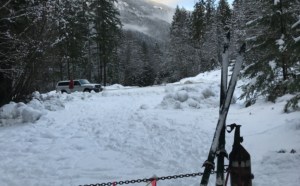
It’s been a long winter in Washington. Though it is late May, temperatures remain cool at the North Cascades Environmental Learning Center and the surrounding mountains are still blanketed in snow. Leaf buds are just opening and most wildflowers have yet to make an appearance on our trails. An occasional errant butterfly gives us hope that spring is here, only to be chased back into hiding by rain or cold. Perhaps the most celebrated harbinger of spring in the North Cascades is the opening of Highway 20, six miles east of the Learning Center. Late snowfall and slides have kept the Department of Transportation busy this spring, and the highway that usually opens in late April is still closed, keeping those of us living at the end of the Highway in relative solitude.

» Continue reading The Ephemeral Beauty of Solitude

The merry (and busy!) month of May

May 5th, 2011 | Posted by in Field Excursions

This month, our 25th anniversary year really starts hopping with a wide range of public events, field excursions, readings, open houses and the first family getaway of 2011. Here’s a round-up of what we’re doing — read on and see how you can plug in.

May 6: Book release party for Ana Maria Spagna’s Potluck: Community on the Edge of Wilderness
Reading, book sales and hor d’eouvres at the Libation Station in Mount Vernon, 5 pm, free!
www.ncascades.org/more_info/news/detail.html?news_id=2189

May 7-8: The History of the Legendary F-Style Mandolin with Stan Miller and John Reischman
Join Bellingham resident and master luthier Stan Miller as he shares his experiences in constructing of one of the most revered stringed-musical instruments ever developed. In our first-ever musical Sourdough Speaker event, mandolin legend John Reischman (Tony Rice Unit, The Jaybirds) will join Stan to demonstrate the range of sounds that these exquisite instruments are capable of producing. As Stan tells the fascinating story of the mandolin in words and images, John will provide a soundtrack of tunes, techniques and commentary.
www.ncascades.org/speakerseries

May 12 (Seattle’s Town Hall) and May 13 (Bellingham’s Sehome High School): Richard Louv
Hear the author of the best-selling book “Last Child in the Woods: Saving our Children from Nature-Deficit Disorder” introduce his latest publication, “The Nature Principle: Human Restoration and the End of Nature-Deficit Disorder.” The Seattle event will feature an environmental education fair with over 20 organizations and a special on-stage conversation between Louv and Pulitzer Prize-winning journalist William Dietrich.
www.ncascades.org/events

May 12 and May 14: Mountain School Open House
Join us to learn more about this award-winning residential environmental education program Thursday, May 12, 9am-4pm or Saturday, May 14, 9am-4pm. We’ll meet at our office in Sedro-Woolley and travel up the Skagit River together to our wilderness campus for a tour of our LEED-certified facility and a chance to meet Mountain School staff. Thursday attendees will have the opportunity to observe the Mountain School program in action. We’ll provide a hot lunch in our Dining Hall and organize transportation.
http://www.ncascades.org/more_info/news/detail.html?news_id=2188

May 14-15: Naturalists’ Delight: Spring Magic in the Methow
Join us for a weekend outdoor adventure with local naturalist Dana Visalli, editor of The Methow Naturalist and an attentive resident of the Methow for four decades. Meandering through the aspen-laced hills with all of our senses open, we’ll learn the basics of identifying the bewildering array of plants, mushrooms and mosses at our feet, while keeping an eye to the sky for birds, butterflies and bugs.
http://www.ncascades.org/programs/seminars/course.html?workshop_id=1042

May 20-22: Learning Center Stewardship Weekend
Join the National Park Service and Institute naturalists to tend to native flora and the habitat surrounding the Learning Center. You are invited to form a relationship with this piece of the planet by contributing to its well being by way of shovel, shears and some elbow grease. We’ll have a variety of projects for all abilities and we’ll provide all of the tools too. Your hard work will be rewarded when our talented kitchen staff serves up hearty and delicious meals. After a satisfying day of giving back to the earth, give yourself a treat and head out for a sunset stroll, relax in our library or spend an evening around the campfire sharing stories of this place. $50 suggested donation.
http://www.ncascades.org/programs/seminars/course.html?workshop_id=1043

May 24: Wendell Berry in Seattle
Critics and scholars have acknowledged Wendell Berry as a master of many literary genres, but whether he is writing poetry, fiction, or essays, his message is essentially the same: humans must learn to live in harmony with the natural rhythms of the earth or perish. Join North Cascades Institute and Seattle Arts & Lectures for our annual “Wilderness and Imagination” event at Seattle’s Benaroya Hall.
www.ncascades.org/events

May 28-30: Memorial Weekend Family Getaway
As spring emerges in the mountains with longer days and explosive green growth, gather your family in the North Cascades for a slate of engaging, hands-on activities including big canoe paddling, hiking local trails, outdoor games and nature crafts, campfires at nights and delicious meals in our lakeside dining hall.
www.ncascades.org/family

And coming up in June….

June 3-5: Spring Birding Weekend
Discover the diversity of avian life that wings into the Pacific Northwest every spring during its annual migration from Mexico and Central and South America to summer grounds in the north. Joining expert birders Libby Mills and Tim Manns, we’ll gain deeper awareness of those wonderful creatures that bring beauty and song to our days. We’ll explore forests, meadows and mountain streams in the Methow and Skagit valleys, spending the first night at the Learning Center on Diablo Lake and the second night camping in the Methow Valley.
http://www.ncascades.org/programs/seminars/course.html?workshop_id=1044

More programs, information and registration at www.ncascades.org/get_outside or (360) 854-2599.